






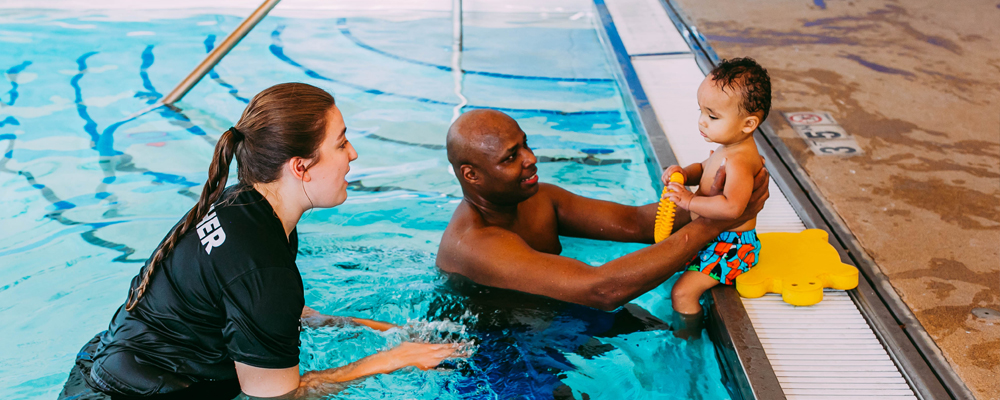
Swim lessons help babies build water comfort, confidence, and early safety awareness. Starting young creates healthy habits and supports motor development, and provides a special bonding time in the water for you and your baby.
To help answer some of the most common questions parents have about baby swim lessons, we reached out to Jules Williamson, Aquatics Experience Manager at Diventures in Omaha. As a proud boy mom with years of experience teaching young swimmers, she offered valuable insights that we’ve highlighted throughout this guide.

What Age Can Babies Start Swim Lessons?
At Diventures, we welcome our youngest swimmers starting at 2 months old with our Baby Beginner class. This class helps little ones acclimate to the water and start practicing safety skills. This early acclimation often reduces water fears later. Babies between two months and six months still possess certain reflexes that make water transition easier, and they haven’t yet developed the “stranger danger” or fear of the water that often peaks around age two.
“We typically see babies start lessons around 6–9 months, but some enroll as early as two months. The earlier they start, the easier it is for them to build comfort in the water and trust with their teacher.” – Jules Williamson
Remember: Every baby develops at their own pace. Readiness matters just as much as age.
Signs Your Baby Is Ready
- Can independently hold their head up
- Shows interest in water during bath time
- Appears curious and engaged in new environments
- Can grasp objects and move arms or legs with some coordination
- Is generally comfortable being held by a parent in the water
- Isn’t overly fearful of new sensory experiences
Has enough neck and core strength to maintain stability when supported
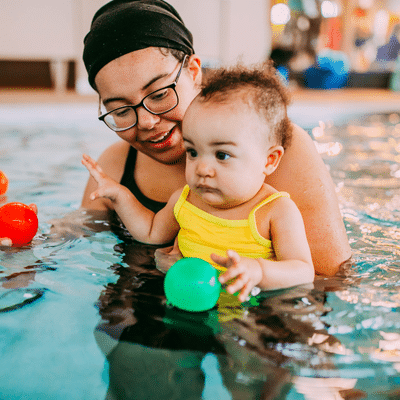
“All children should learn basic lifesaving water skills, and the earlier they’re enrolled, the smoother the transition tends to be.” – Jules Williamson
Why Enroll in Baby Swim Lessons?
Safety
- Builds early comfort and reduces fear
- Teaches water awareness
- Reinforces safe behaviors around pools, tubs, and open water
Developmental
- Strengthens motor skills and coordination
- Helps babies sleep better
- Increases appetite
- Boosts sensory development and confidence
For Parents
- Unique bonding time
- Helps make bath time and water play easier
- Provides peace of mind around pools and beaches
“Every baby has a different reaction, comfort level, and timeline. Not all babies progress the same way—and that’s completely normal.” – Jules Williamson
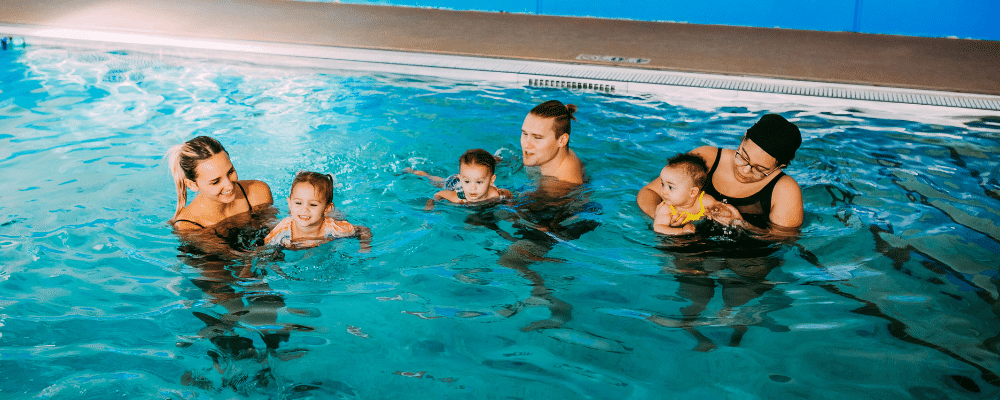
Types of Swim Lessons by Age
- Under 2: Parent-child classes focusing on comfort and gentle skills
- Ages 2–4: Basic swim readiness—bubbles, floating, submersion
- Age 4+: Formal lessons and safety skills
Diventures Swim Programs for Ages 5 and Under
Diventures offers a structured, age-appropriate curriculum designed to build skills progressively and safely:
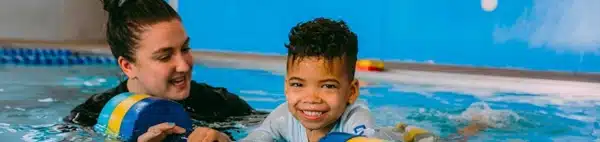
- Baby Beginner: For infants (2 months and older) to toddlers (up to 35 months). Gentle water introduction with full parent participation. Skills include climbing out of the pool, back floats, and learning to use arms and legs to swim.
- Baby Independence: For toddlers (18 months to 35 months) who have graduated from our Baby Beginner class. Parents are no longer in the water with the child. We focus on advancing safety skills and learning to swim independently with windmill arms and rollover breathing.
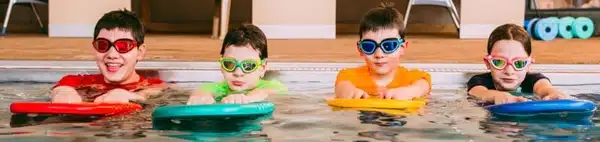
- Level 1 Beginner: For ages 3 and older. This class prepares young swimmers to float, swim short distances, get comfortable going underwater, and safely get out of the pool.
- Level 1 Advanced: This class teaches kids to swim for 20 feet with windmill arms and independent rollovers.
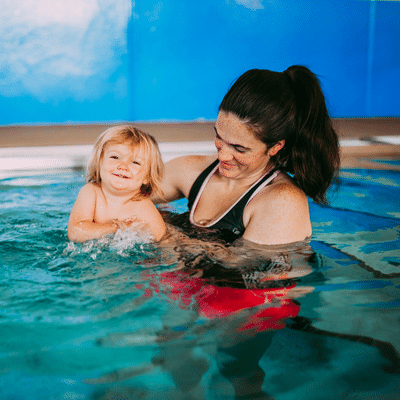
What to Expect in the First Lesson
- Quick check-in and parent participation
- Simple activities: supported floats, gentle kicks, songs, safety skills
- Bring: swim diaper, towel, no goggles needed
- Lessons are short (30 min) to avoid overstimulation
Infant swim lessons reduce risk, but no child is ever drown-proof. Constant supervision around water is essential.
“An acclimation period is almost always necessary. The pool is new and the teacher is a new face, so tears are common at first. Our teachers are very hands-on and guide parents through what their baby is doing and why.” – Jules Williamson
Tips for a Smooth First Lesson
Here are easy ways to help your baby feel confident and happy in the pool:
- Play with water at home before lessons
- Wait at least 30 minutes after feeding to avoid an upset tummy
- Keep pre-class routines calm
- Arrive 10 minutes early to settle in
- Follow your instructor’s guidance
- Take breaks if your baby feels overwhelmed
- Bring a cozy towel for after class
- Don’t forget a dry diaper for after class
“Bring a reusable swim diaper, a towel, a dry bag—and an open mind!” – Jules Williamson
Choosing the Right Swim School
When selecting a swim school, consider the following qualities:
- Clean, well-maintained facilities
- Warm water temperature (87–94°F is ideal for babies)
- Small class sizes and appropriate instructor-to-child ratios
- Certified, trained instructors
- Age-appropriate curriculum
- Clearly communicated progress updates
- Flexible scheduling and make-up classes
- Fair pricing for lesson length and quality
- Free trial or preview lessons
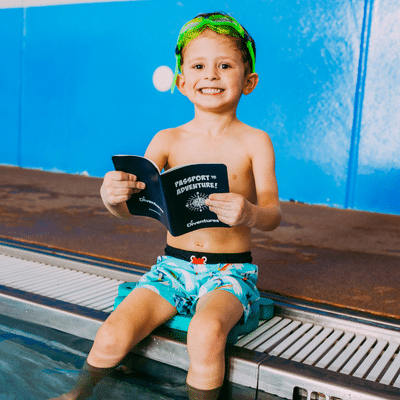
Diventures offers all of the above, plus a warm, family-friendly environment and expert infant instructors.
“We keep class sizes small, maintain a warm pool and air temperature, and require over 40 hours of instructor training before teaching. Our instructors truly love what they do and are committed to creating a safe, fun learning environment.” – Jules Williamson
Frequently Asked Questions
When can babies start swimming lessons?
Our Baby Beginner swim lessons are the first building block designed for children 2 months to 35 months. During these lessons, a parent or guardian is in the water with their baby for the entire 30-minute lesson.
How long will my child stay in a level?
Every swimmer is different, so the time needed to complete each level will vary. Our swim teachers will make sure that your child is being challenged and having fun throughout every lesson. Follow along and see your child’s swim progress with our Diventures Passport to Adventure!
What if my child is afraid of the water?
No problem! Our teachers are trained to help even the most fearful swimmers. If your child is afraid, let us know! We can help your child feel confident in the pool and keep them feeling safe at all times.
What do I need to bring to swim class?
All you need to bring is a bathing suit, towel, and swimming goggles. For children 3 and younger, or those not toilet trained, we require reusable swim diapers. Goggles and reusable swim diapers are available in our retail store.
Do I need to be in the pool with my child?
In Baby Beginner swim classes, a parent or guardian is in the water with their baby for the entire 30-minute lesson. Most babies age out of Baby Beginner once they reach 3 years and transition to our Level 1 Beginner class. Some babies who display confidence in the water early on will graduate to our more advanced baby swim class, Baby Independence.
When can babies go in a chlorine pool?
There is no official age requirement for chlorinated pools. Many babies begin parent-child swim activities around 2–6 months old in properly maintained, warm pools for short periods with close supervision.
Start With a Free Trial Lesson
Diventures offers a free trial, a tour, and time in the water with a certified instructor to assess your child’s comfort. It’s designed to give you peace of mind and help your child feel at ease—because choosing swim lessons shouldn’t be stressful.
“Diventures really is a one-stop shop. You don’t have to choose between friendly instructors, great curriculum, optimal class sizes, or a warm pool—you get it all here.” – Jules Williamson